Friday, October 3, 2014

ESL/EFL Discussion Activity: Famous People

This is a discussion activity about famous people and words that describe people. The main goal of this lesson is to increase the students' vocabulary and fluency. The lesson starts with pictures of famous people and the teacher asks the class to describe the people and explain why they are famous or to ask a question if they do not know who the person is.  The next page is for brainstorming and asks the students to name as many words that they can use to describe people.  Then there is a list of vocabulary words that describes people and finally the activity ends with a list of discussion questions. This can be successfully taught in a virtual classroom and a traditional classroom. The following video is a lesson in google hangouts with upper-intermediate to advanced level students.


Monday, September 29, 2014

ESL/EFL Conversation Activity: Do you wish you...?

The goal of this conversation activity is to allow the students to practice speaking about fairly familiar topics in a comfortable environment.  The students would finish the question Do you wish you...? and then answer the question.  The teacher will then provide error correction and teach new vocabulary that would be appropriate for every topic.  This type of lesson is really good for the intermediate student who does not need structured sentences and allow them to practice in a free environment. This lesson has been taught successfully in a virtual classroom with an example video below.  It can also be used as a supplemental lesson in virtual or traditional classrooms.  


Sunday, September 21, 2014

ESL/EFL Discussion: Would you rather...?

This discussion activity is targeted to students who are aiming to increase their fluency through general conversation.  The lesson has pictures where the students would choose between two choices.  The lesson starts with 'Would you rather...? and continues with the choices the students would make. When I set this lesson up for the students, I explained that the pictures are merely a springboard to other conversations on the same theme.  The students seemed to understand that and followed my directions in that they did not stick to the topics.  I gave feedback on the chat box so there would be no need to interrupt the students.  This lesson can be used successfully in a virtual and a traditional classroom.  The following is a recording of the lesson I taught as a teacher at Verbling:  


Friday, September 19, 2014

Fluency lesson: When did you first...?

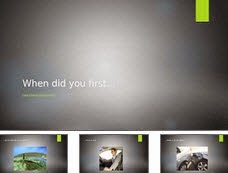
This fluency lesson allows for the teacher to tailor the conversation to the level of the student.  Each page on the PowerPoint has an image and the rest of the question of 'When did you first...'.  If a student or class are beginners, the lesson can be done fairly quickly and be used as a supplement to a grammar lesson.  If the students are at a higher level, the teacher can use these questions as a springboard to free conversation.  Ideally, the teacher should allow the students to lead the conversation and just be quiet and listen for errors so that the teacher can give proper feedback.  This lesson can be used successfully in a virtual classroom and a traditional classroom.  The following is an example of a lesson with a small multicultural group in google hangouts:


Thursday, September 18, 2014

ESL/EFL Lesson: Basketball

This ESL/EFL lesson on basketball allows the student to practice speaking and listening, learn new vocabulary and go though a reading exercise.  First, the teacher will have a warm up discussion to ascertain how much students like basketball and how interested they are in the sport.  Then the students will do a matching exercise with vocabulary words they will find in the reading.  The reading will be about a young student who forsakes his homework to go to a Harlem Globetrotters game only to find out that there is a pop quiz when he comes into class the next day.  After the reading, there is short excercise on basketball idioms and basketball vocabulary.  Then there is a fluency excercise for students to ask and answer questions about the topic.  Finally, if there is time, the students will do a web search and look for answers to the trivia questions on the final slide.  This lesson has been successfully taught in a virtual classroom and would work well in a traditional classroom as well.  The following video is an example on how this lesson has been used in a virtual classroom situation:


Tuesday, September 16, 2014

Discussion Activity: Baseball

This discussion activity allows the students to activate their passive vocabulary about a popular sport in some parts of the world.  The students will match pictures with vocabulary words.  Then they will learn idioms associated with baseball.  Then there will be some fluency activities.  The first one will be with questions starting with 'do you like' and the final fluency activity will consist of questions of a general nature about baseball.  Finally, the lesson will consist of trivia questions where the students would either use their general knowledge or would go to a search engine to find the answers.  This lesson can be successfully taught in a virtual classroom as well as a traditional classroom.

Tuesday, September 9, 2014

Discussion Activity: Adoption

This discussion activity helps the students develop their fluency, learn new vocabulary and practice reading.  The activity starts with a warm-up discussion to see what the student knows about adoption.  Then there is a matching activity where the students match the verbs from the reading to synonyms.  Third, there is a reading about a family who experienced an international adoption. After the reading, there is another matching activity where the students would match word collocations from the reading.  Finally, there is a list of questions for the students to discuss.  This lesson can be successfully conducted in a virtual classroom or in a traditional classroom.  The following is an example of a lesson in a virtual classroom:


Sunday, September 7, 2014

Discussion Activity; Accidents at Home

This Discussion activity aims to increase the students' fluency by talking about a fairly familiar subject and at the same time activating their passive vocabulary.  There are four slides to this activity.  The first slide is general and the slides start to narrow down until the students get to discussion questions.  The first slide allows the students to describe pictures of accidents in general, for example, a person slipping on a banana.  The second slide are pictures of items found around the house and the students have four questions they would answer, which includes:

  1. Where are these found in a house?
  2. Why could they be dangerous?
  3. To Whom could they be dangerous?
  4. What could someone do to lesson the danger they present?
The next page gets even more specific.  The basic premise is that is asks questions starting with 'What do you need if...?  For example, "What do you need if you cut your finger preparing food?"  The final slide is a list of discussion questions based on the topic.  This discussion activity can be used in a virtual classroom or a traditional classroom.

Here is an example of this lesson being taught in a virtual classroom:


Friday, September 5, 2014

Vocabulary & Fluency Activity: Sickness & Health

This PPT is a vocabulary and fluency activity that would work well to supplement material dealing with sickness and health.  The first page is a matching activity where the students draw a line from one word to another to make a word partnership such as 'broken ankle' or 'stuffy nose'.  After the word partnerships are matched, the teacher can then ask the students to use these partnerships in a sentence or in a question and see if the students can have a conversation using these word partnerships. The final page is a list of questions dealing with sickness and health.  The students can choose the questions they like and then ask the other students or they can go through the list systematically.  The goals are for the student to activate their passive vocabulary while practicing speaking on a general topic that is actually needed.  The following is an example of this lesson being taught in a virtual classroom:


Wednesday, September 3, 2014

Discussion Activity: Things that Annoy You!

The discussion activity Things that annoy you! aims to help the students increase their fluency as well as possibly activating passive vocabulary.  The first page is a page for brainstorming.  The teacher can ask the students to write  out on the whiteboard the many things that annoy them.  Then the teacher can ask the students to give examples and explain to the group why it is annoying.  The students can ask and answer questions.  Then the final slide is a list of questions.  The teacher can have the students choose two questions they can ask and answer.  In addition, the class can answer the questions systematically and follow the list.  Again, the purpose of this is to allow the students to practice speaking and develop their fluency on a topic that is easy to discuss.  This activity can be used successfully in a virtual classroom and a traditional classroom.

Tuesday, September 2, 2014

Vocabulary Activity: Finance

This activity concentrates on developing financial vocabulary as well as discussing the terms involved in finances.  There are two slides for this activity.  The first slide is a list of blank spaces for the student to write the word based on the definition read by the trainer.  This allows the student to also practice listening. The second slide is a basic guessing game where the student chooses a word and gives the definition.  The other students guess which word it is. Alternatively, the student can choose a word and ask a question with the word that could facilitate discussion which could be led by the student or teacher. This lesson can be used successfully in a virtual classroom as well as a traditional classroom.

Monday, September 1, 2014

Fluency Activity: Wishes & Dreams

This is a fluency activity that allows the students to talk about topics that are near and dear to their hearts.  On the first page, the students brainstorm wishes that people in general have.  For example, people wish to get married, to have a home, to have a family, to have a good job and so the students brainstorm all the wishes that people have in general.  The next page is a list of questions on this topic.  The first page is mainly a warm up for the questions.  There are many ways a teacher can use these questions.  First, the teacher can systematically go through questions.  Second, the teacher can ask the students to choose two questions they are interested in and to ask their colleagues.  Finally, one student can choose a question and ask the class and facilitate the discussion and see how long they can talk about that question.  This activity can be used successfully in a virtual classroom as well as a traditional classroom.

Sunday, August 31, 2014

Fluency Exercise: Working Life: Talking About You!

This is a great fluency exercise for people in the workplace.  This can be used successfully in a virtual classroom or in a traditional classroom.  The first slide consists of several pictures and the trainer asks the students to describe the picture.  Then the trainer asks the students to relate one of the pictures to how they feel about their job.  The students start talking a bit about what they do and how they do it.  The next page is a list of questions about their job, corporate culture, their attitudes towards work and allows the students to expand and develop their fluency and increase their confidence talking about a relatively familiar topic:  their jobs and work life.

Saturday, August 30, 2014

Discussion Activity: Youth & Old Age

I wrote this activity about seven years ago to be used in a virtual classroom although anyone can use this in a traditional classroom as well. Anyway,  the basic premise for this lesson is to allow the students to activate passive vocabulary, learn new vocabulary and to practice speaking about a relatively familiar topic in order to increase and/or improve the students' fluency.  The first page is a list of vocabulary words that the students can define, practice pronunciation and/or discuss.  The second page is a blank slate for the students and/or teacher to write 'rites of passages' in their culture.  The final slide is a list of questions that the students can ask and answer.  The level for this activity is intermediate to advanced.

Friday, August 29, 2014

Business Writing Presentation for ESL/EFL Teachers

This PPT is a quick presentation on the difference between American English (AmE) and British English (BrE) in regards to phrases and the small differences between AmE and BrE when writing for business purposes.  Many times, non-native speakers will combine rules from both AmE and BrE because they are not aware of the minute differences.  So, they run the risk of losing credibility when writing to clients because of these differences.  This PPT can be used in addition to other writing activities that allow the students to practice their writing following different scenarios.  The material from this PPT has been used successfully in a virtual classroom or a traditional classroom.

Thursday, August 28, 2014

EFL/ESL Discussion Activities: Your Products & Services

How many times have you talked to a non-native speakers of English and asked them about their job?  Where they able to talk much about what they do and about their products and services?  If not, this discussion activity will give them the chance to practice in an environment where they can receive feedback=their English class.  The PPT starts with some pictures and depending on the level, the teacher can have the student describe the profession related to the picture or just describe the picture.  They then tell the teacher which picture relates closest to their own job.  The final slide is a list of questions related to the students' jobs as well as their products and services.  This PPT has been used successfully in a virtual classroom as well as traditional classrooms.

Wednesday, August 27, 2014

Learn Business Idioms

I wrote this worksheet on Business Idioms about ten years ago. This is a worksheet for advanced level Business English students. I took the words/idioms  from the Economist Magazine. Although I'm not a huge believer in teaching idioms to students for them to actually use (until it comes out naturally), I do believe that students should have idioms in their passive vocabulary so that they can understand native speakers who do use idioms without thinking.  In my opinion, non-native speakers should use idioms the same way, without thinking.   I have taught this worksheet with one-to-one students and group lessons.  The students can also use this as homework and then the teacher can have them explain the idioms during the class session. Anyway, I have used this worksheet successfully in traditional classrooms as well as virtual classrooms. The students really enjoy this worksheet because they feel that they are learning something new.  Here is an example from a virtual classroom:


Tuesday, August 26, 2014

What would you say?

I wrote this activity about seven or eight years ago as a discussion activity. This activity has been used successfully in a virtual classroom and a traditional classroom.  This activity encourages the students who are intermediate and above to explain what they would say about a certain situation and in addition to give the students a chance to provide their opinion about certain issues.  For example, on the first slide, there is a picture of a pregnant woman smoking.  The activity asks what the students would say to this person.  I have used this activity in several consecutive class sessions as the students can normally talk a lot about many of these issues.

Saturday, August 23, 2014

ESL/EFL Activities: Giving Advice

I wrote this activity when I was in the LANCELOT course, which was a course funded by the EU that taught language teachers how to effectively use virtual classrooms plus best practices in the virtual classroom for language training.  This PPT came out of one of the modules from that class.  I have used this activity successfully in the virtual classroom as well as the traditional classroom.  The lesson starts out with a quick review of the modals of advice and then each page in the PPT slide gives a scenario and the students increase their fluency by giving advice for each situation. The teacher can use this in several different ways.  First, the teacher can divide the students into small groups or pairs and have them discuss what advice they would give and then have a whole group discussion. Alternatively, the teacher could choose one volunteer from the class to give the advice for the particular scenario and then the class could have a discussion.  Additionally, the teacher could use this as homework for the students to practice writing and have them write their advice in an email, blog, advice column or letter format.  These are just three ways I've thought of to use this material, but I'm sure there are many ways the teacher can choose to use this material based on their personal teaching style.

Thursday, August 21, 2014

EFL Spoken Grammar Activity: Practice Asking Questions

I wrote this Spoken Grammar Activity while I was in graduate school which seems like only yesterday and yet it was fifteen years ago.  Anyway, this is a very simple activity where the students practice using the WH questions and at the same time work on tense and also on their conversation skills.  The activity consists of a chart of all kinds of nouns with the question at the top:  Who/What/Where is/was your favorite...?  So, what the students do is choose a noun from the chart, for example, 'brand of shampoo' and then the student must form the question "What is your favorite brand of shampoo?"  Another example is "person", so the student can choose how they want to form the question:  "Who is your favorite person?"  or 'Who was your favorite person when you were younger?"  This activity can be used with any level because it can be adapted to focus on what the students need.  Some of the students will need practice forming the question and answering.  Some of the students will need practice developing fluency and the teacher can use this activity as a springboard to free discussion.  I have used this with groups where only one question was actually asked as we were able to use that as a way to get into a conversation everyone was interested in.  I have also used this with groups were just asking the question was the goal and so we went through the entire table.  This activity has been used successfully in the virtual classroom as well as in traditional classrooms with every level.